

Jameka Haynes • November 17, 2026
Let me ask you something. Have you ever walked into a room and immediately felt like you were being tolerated rather than welcomed?
I have. More times than I care to count.
Nobody said anything disrespectful. Nobody asked me to leave. There may have even been a few polite smiles. But something about the atmosphere made me feel like my presence was being endured rather than embraced. And if you’ve ever experienced that feeling, you know exactly what I’m talking about.
Every November 16, the world recognizes the International Day for Tolerance. I’ve been in enough rooms to know that being tolerated and feeling like you belong are two very different experiences.
And I’m not talking about someone openly rejecting you. I’m talking about the subtle ways people make it clear that while your presence is acceptable, your authentic self isn’t always welcome.
Tolerance: More Than Just Putting Up With People
Here is a little history worth knowing. In 1995, the United Nations declared the International Year for Tolerance, and UNESCO adopted the Declaration of Principles on Tolerance. The following year, November 16 was established as the annual International Day for Tolerance to promote peace in a world facing conflict and division.
This caught my attention: UNESCO didn’t define tolerance as simply putting up with people. Its declaration describes tolerance as respect, acceptance, and appreciation for the diversity of humanity. It specifically rejects condescension and makes clear that tolerance doesn’t require abandoning our convictions or excusing injustice. Now that’s a definition I can get behind!
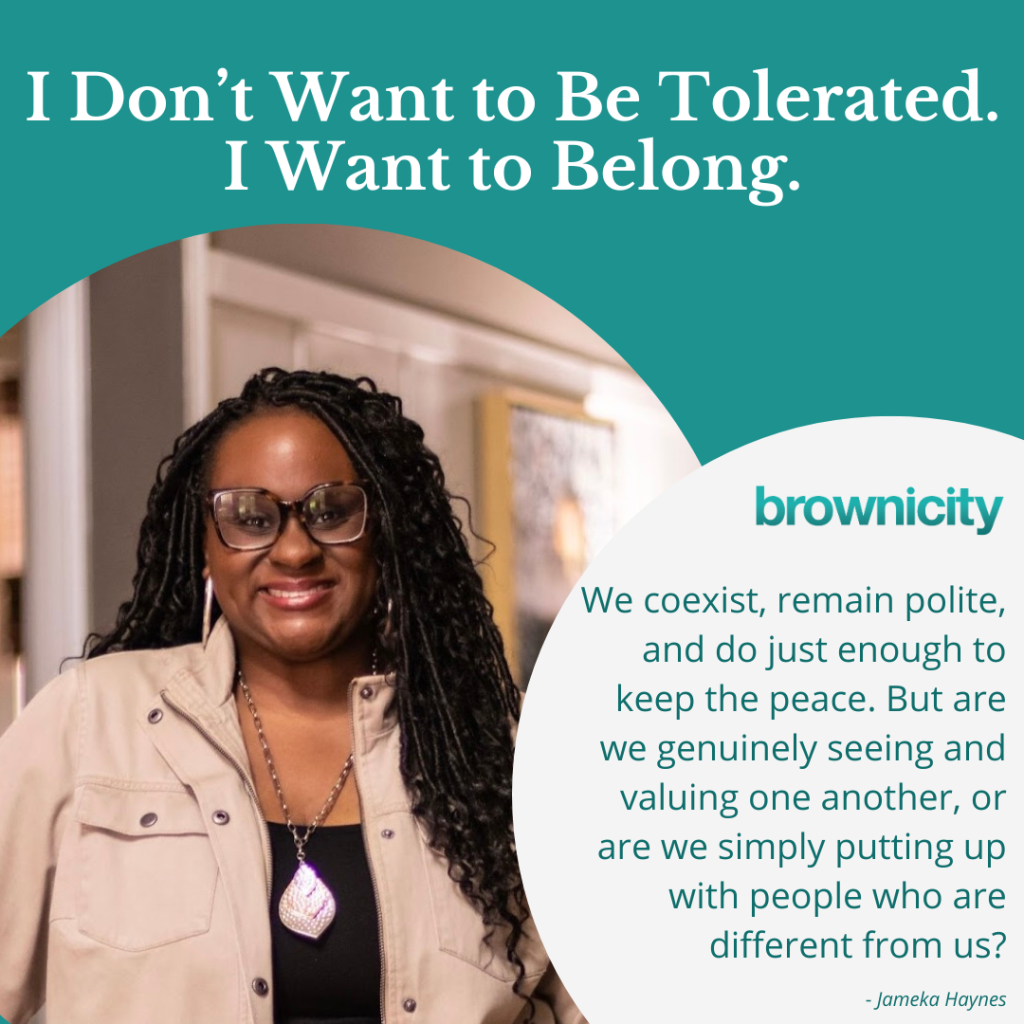
But somewhere along the way, we’ve reduced tolerance to something much smaller. We tolerate the coworker who thinks differently, the family member whose choices we don’t understand, or the neighbor whose beliefs challenge our own. We coexist, remain polite, and do just enough to keep the peace. But are we genuinely seeing and valuing one another, or are we simply putting up with people who are different from us?
A BOLD truth: Tolerance loses its meaning when we acknowledge someone’s presence but fail to recognize the humanity behind it.
There’s a Difference Between Tolerance and Belonging
Let’s break it down.
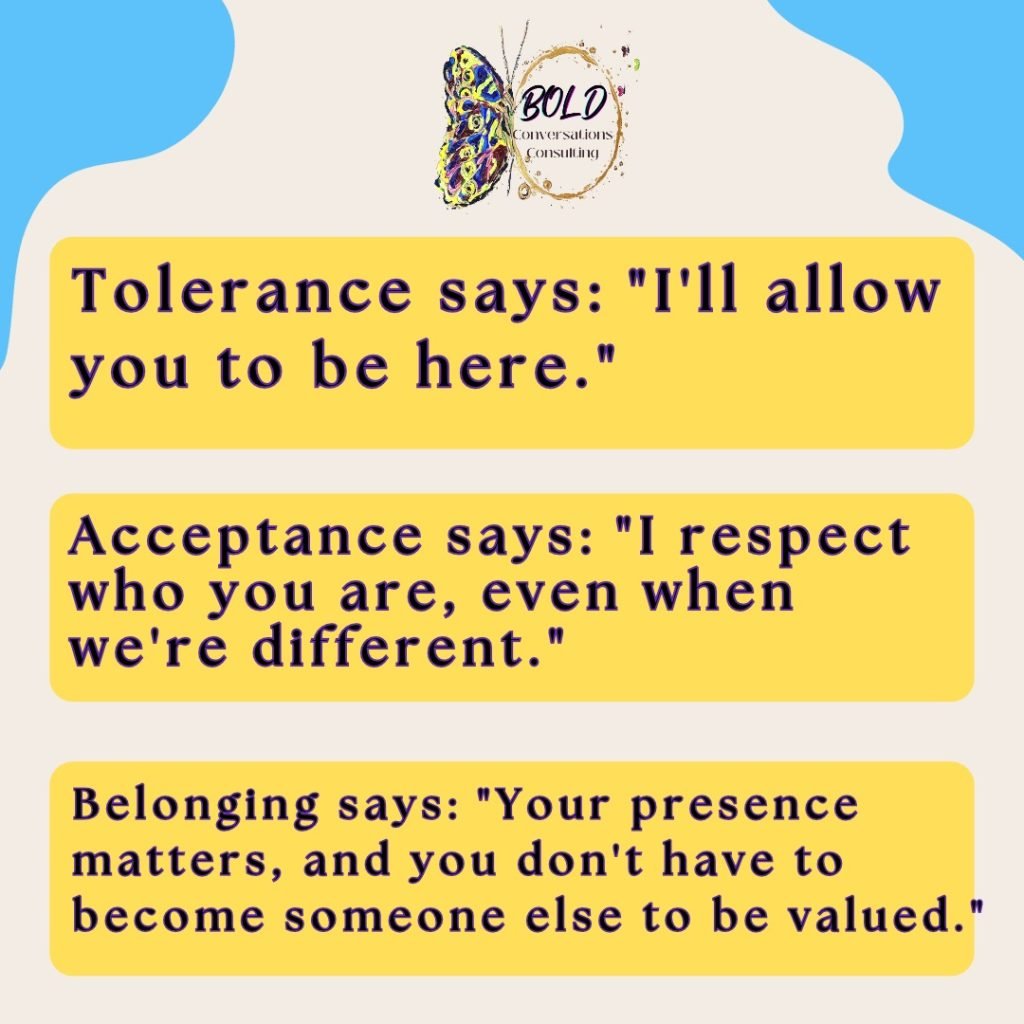
Belonging doesn’t mean agreeing with everything someone believes or does. It means recognizing that our differences don’t diminish our shared humanity.
As Maya Angelou beautifully reminded us: “We are more alike, my friends, than we are unalike.”
Have we become so focused on what makes us different that we’ve lost sight of the humanity that connects us?
Have You Been on the Receiving End of Someone’s Tolerance?
Before you answer, consider how bare-minimum tolerance shows up in everyday life.
At the family gathering, you’re invited, but everyone seems more comfortable when you keep your opinions to yourself.
At work, you have a seat at the table, but your ideas aren’t acknowledged until someone else repeats them.
Among friends, you’re included when someone needs your help but overlooked when meaningful connections happen.
In community spaces, you’re greeted with a smile, but nobody takes the time to know your name or your story.
Maybe you’ve been dismissed because you’re too young, too old, too outspoken, too different, or simply not what someone expected.
Being included doesn’t automatically mean you’re valued, and being welcomed doesn’t always mean you belong.
To the Person Who Feels Overlooked
I see you, and I know how exhausting it can be to constantly read the room, rehearse your words, and question whether you’re too much or not enough. Please remember that being overlooked doesn’t make you less valuable. Being excluded doesn’t make you less worthy. Being misunderstood doesn’t mean you have to spend your life explaining yourself. Not every room will recognize your value, but that doesn’t mean your value is missing. You don’t have to shrink yourself, silence your voice, or compromise who you are just to make someone else comfortable.
Surround yourself with people and spaces where your humanity is embraced, not merely endured. And while you’re finding those spaces, remember that you have the power to create that same sense of belonging for someone else.
Now, Let’s Have a BOLD Conversation With Ourselves
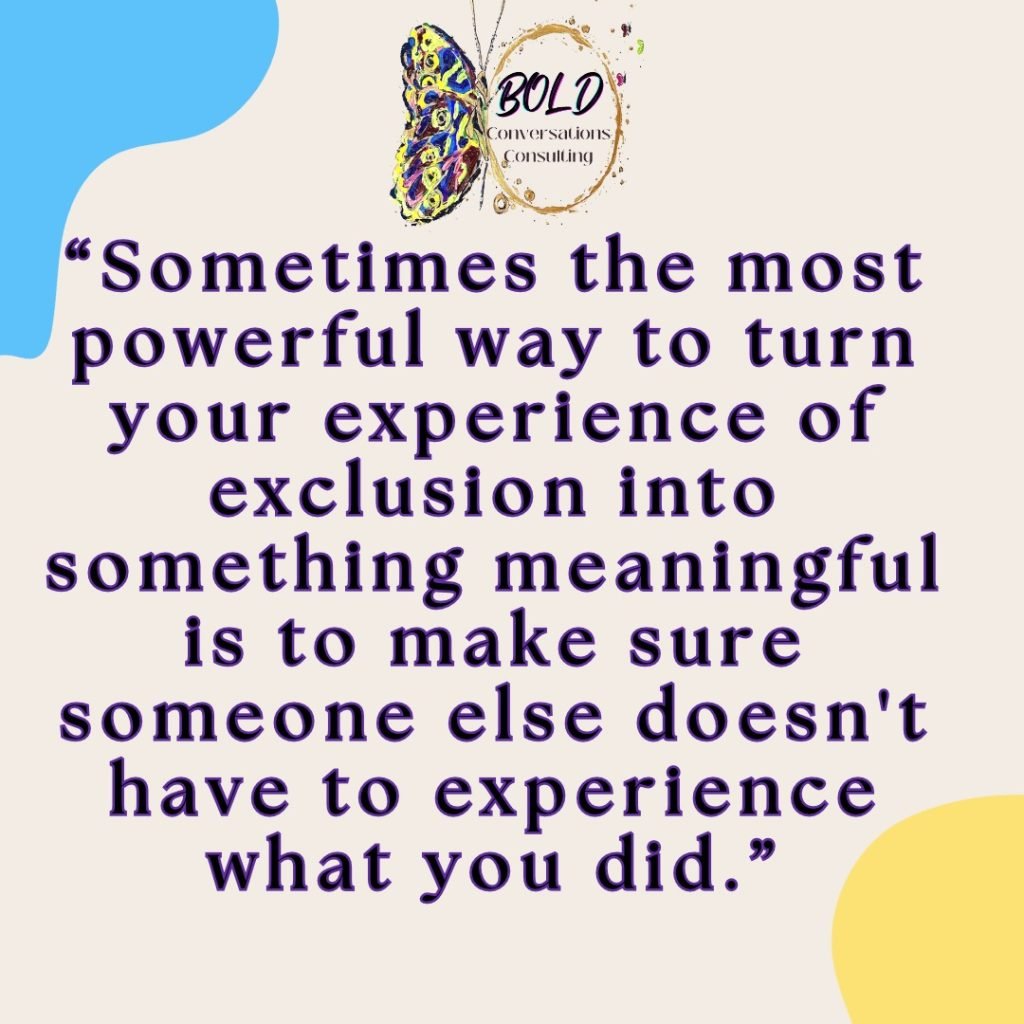
Now, the convo might get a little uncomfortable because, yes, it stepped on my toes, too! What if we took a moment to examine not only where we’ve felt overlooked, but also where we may have overlooked someone else?
Maybe we’ve dismissed someone’s perspective because we disagreed or made assumptions before hearing their story. Our intentions may not have been harmful, but intentions don’t erase impact.
So here’s a BOLD challenge:
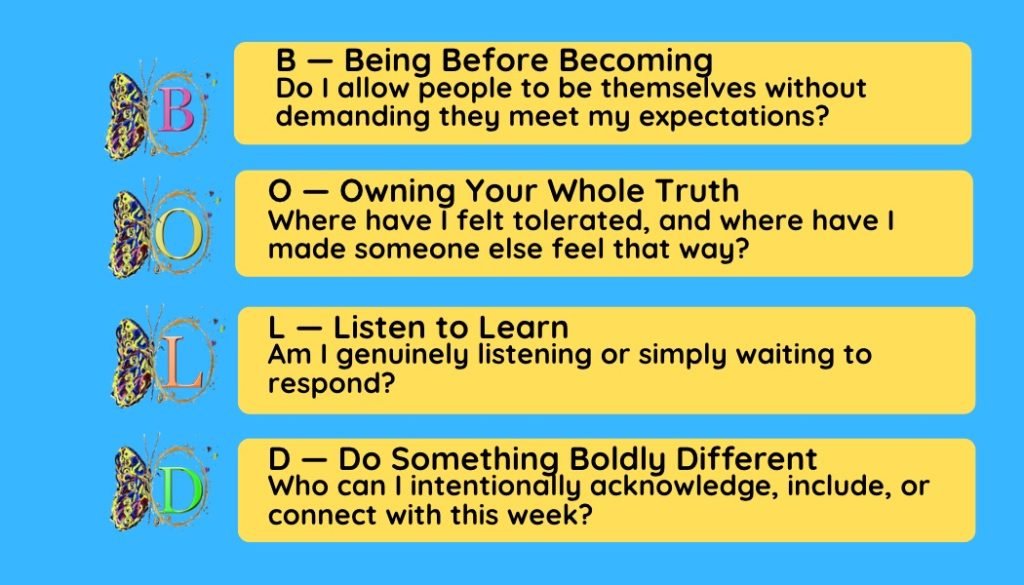
Humanity First. Always.
Being tolerant is one thing, but making someone feel like they genuinely matter is another. So here is a question worth asking ourselves: Do people actually experience belonging in our presence? Because let’s be real, we can be polite without being welcoming, inclusive on paper while excluding people in practice, and talk about loving humanity while overlooking the human being standing right in front of us.
We don’t have to agree on everything to recognize the humanity in everyone. What might change if we became more intentional about making people feel seen, heard, respected, and valued? Maybe belonging begins with something as simple as acknowledging someone’s presence and taking the time to recognize their humanity. After all, tolerance, as UNESCO envisioned it, isn’t just about opening the door. It’s about recognizing the dignity of the person walking through it. Belonging is making sure they know their presence matters.
Resources
- UNESCO — International Day for Tolerance
- National Day Calendar — International Day for Tolerance
- Maya Angelou — Human Family

LinkedIn: http://linkedin.com/in/coachjamekahaynes
IG: @boldconvojsh
Facebook: BOLD Conversations
Website: www.boldconvos.com

Recent Comments